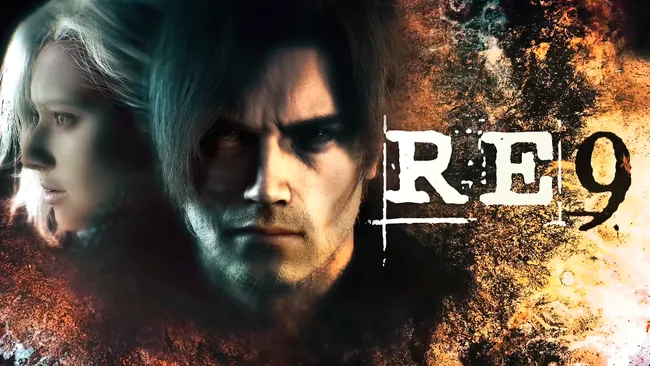
How Resident Evil Requiem Resurrects a 20-Year-Old Mystery

For over two decades, the name Ashcroft was a whisper in the wind—a footnote in the chaotic survival logs of Raccoon City. But with the release of Resident Evil Requiem (RE9), Capcom has done more than just release a sequel; they have completed a generational circle of trauma and truth that began in 2004’s Resident Evil Outbreak.
If you want to understand why Grace Ashcroft is the most significant protagonist in years, you have to look at the bloodline of the “Unknown” that she carries.
1. From Alyssa to Grace: A Multigenerational Investigation
In the original 1998 Raccoon City outbreak, Alyssa Ashcroft was an investigative reporter for the Raccoon Press. She didn’t just survive; she documented. While others were focused on ammunition, Alyssa was focused on the “Why.”
Fast forward to 2026: her daughter, Grace Ashcroft, enters the decaying town of Wrenwood. Grace isn’t there by accident. She is armed with her mother’s unfinished field notes—documents that were deemed “conspiracy theories” for 20 years. This narrative bridge turns Requiem into a historical detective story, where the player isn’t just fighting monsters, but unearthing a corporate cover-up that survived the nuclear sterilization of Raccoon City.
2. The Reconstruction Mechanic: Visualizing the Ghostly Past
The standout feature of Resident Evil Requiem is Grace’s Scene Reconstruction ability. As an FBI Analyst, Grace uses a specialized HUD to “read” biological residues and environmental disturbances.
Environmental Echoes: When Grace enters a room—like the haunting Wrenwood Hotel lobby—she can trigger a digital reconstruction of the events that occurred hours or even decades prior.
The Science of Survival: This mechanic moves away from the “super-soldier” tropes. You aren’t just shooting; you are observing. You see the ghostly, blue-hued outlines of scientists fleeing or Ganados-style citizens turning. It forces the player to engage with the History of the location to solve modern-day puzzles.
3. Closing the “The Connections” Plot Hole
For years, the organization known as The Connections (responsible for the Mold in RE7 and RE8) felt like a loose end. Requiem finally anchors them. Through Grace’s investigation, we discover that Wrenwood was a secondary testing site for “E-Type” bioweapons long before the Winters family incident.
By discovering her mother’s old tapes in the Wrenwood Hospital, Grace links the 1990s Umbrella experiments directly to the 2026 resurgence. It is a masterstroke of storytelling that rewards long-time fans who have been following the lore since the PlayStation 2 era.
4. The Emotional Weight: A Dying Legend’s Mentor
The dynamic between Grace and Leon S. Kennedy provides the “Science” of human consequence. Leon represents the physical toll of bio-terror (the Raccoon City Syndrome), while Grace represents the intellectual future.
Leon protects Grace from the horrors in the shadows, but Grace protects Leon from the horrors in his own mind. She provides the context and the “Truth” that Leon was too busy surviving to ever fully understand.
5. Why This Matters for Survival Horror
Resident Evil Requiem proves that the “Unknown” is scarier when it has deep roots. By utilizing the Ashcroft legacy, Capcom has made the world feel lived-in. The scares in Wrenwood aren’t just about what is behind the door; they are about the 30 years of suffering that led to that door being locked in the first place.